Bigplantlad
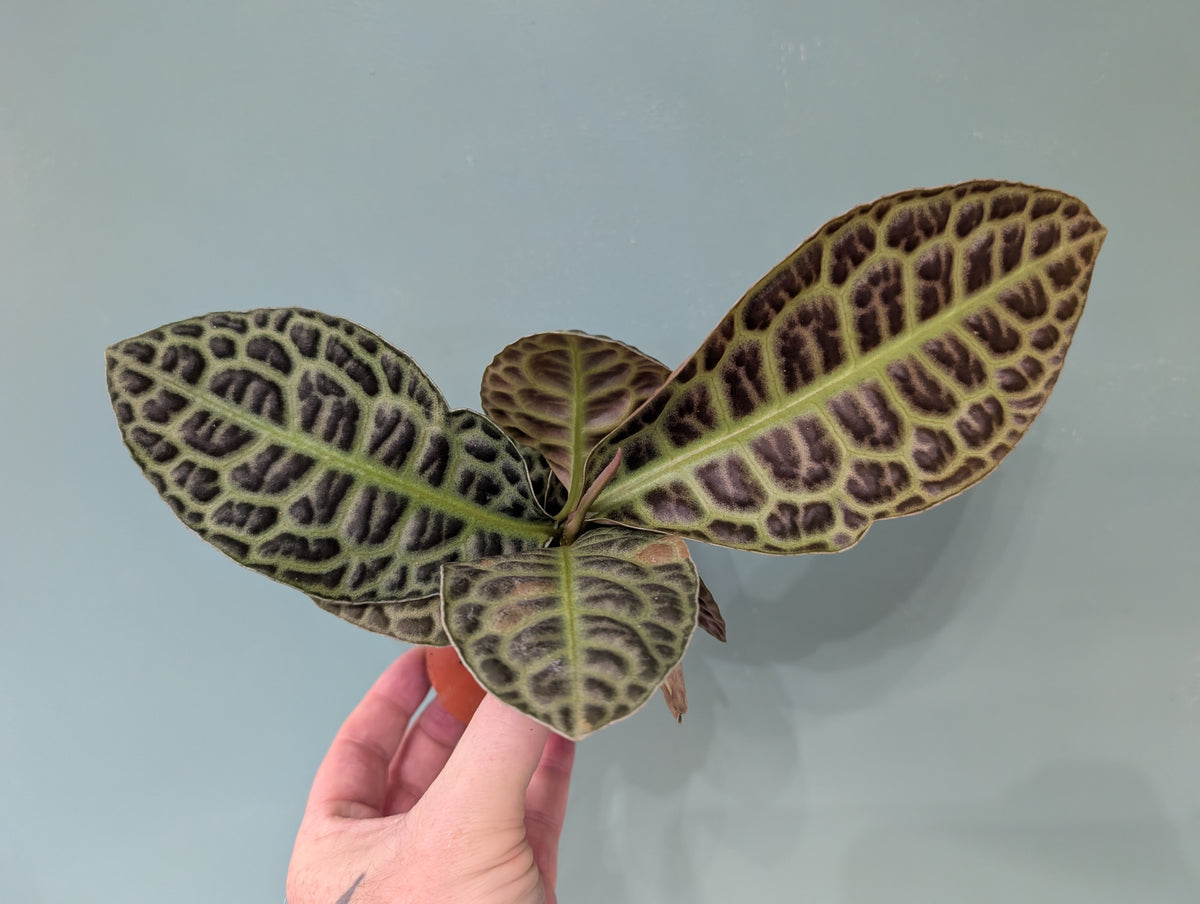
Labisia Kura Kura Turtleback 8cm
Labisia Kura Kura Turtleback 8cm
Couldn't load pickup availability
🐢 Labisia ‘Kura Kura’ (Turtleback) Care Guide
Labisia ‘Kura Kura’, often nicknamed Turtleback, is a plant that draws you in with its remarkable foliage. The deeply textured leaves have a quilted appearance, giving each one a sculpted, almost hand-crafted look. It grows at a gentle pace, slowly forming a compact clump that’s every bit as rewarding to watch as it is to own.
This is a plant that appreciates consistency rather than constant attention. Keep its environment warm and comfortable, and it’ll reward you with healthy new leaves that seem to become more characterful with age.
☀️ Light
- Prefers bright, filtered light throughout the day.
- A spot with gentle morning sunshine is ideal.
- Avoid strong afternoon sun, which can mark the textured foliage.
- Too little light may slow growth and reduce leaf colour.
💧 Water
- Water when the surface of the soil begins to dry.
- Keep the soil evenly moist but never saturated.
- Ensure excess water drains away freely.
- Water a little less during the cooler months.
🌫️ Humidity
- Thrives with moderate to high humidity.
- Higher humidity helps keep the foliage lush and healthy.
- A terrarium, cabinet or naturally humid room suits it particularly well.
- Keep away from dry heating and cold draughts.
🍽️ Feeding
- Feed every 2–4 weeks during spring and summer.
- Use a balanced liquid houseplant fertiliser at half to full strength.
- Stop feeding once growth slows through autumn and winter.
🌱 Quick Tips
- Use a free-draining mix that retains a little moisture.
- Keep temperatures warm and stable.
- Avoid allowing the soil to dry out completely.
- Wipe the leaves gently if dust begins to build up.
- Repot only when the plant has clearly outgrown its container.
💡 Big Plant Lad Wisdom
You’ll probably introduce people to this one by saying, “Feel the leaf.” It’s one of those plants that gets passed around because nobody quite believes the texture until they’ve seen it for themselves.
Share